Beyond Instinct: The Social Roots of Your 'Gut Feeling'
- Sciaria
- Sociology
- Dec 05, 2025
- 0 Comments
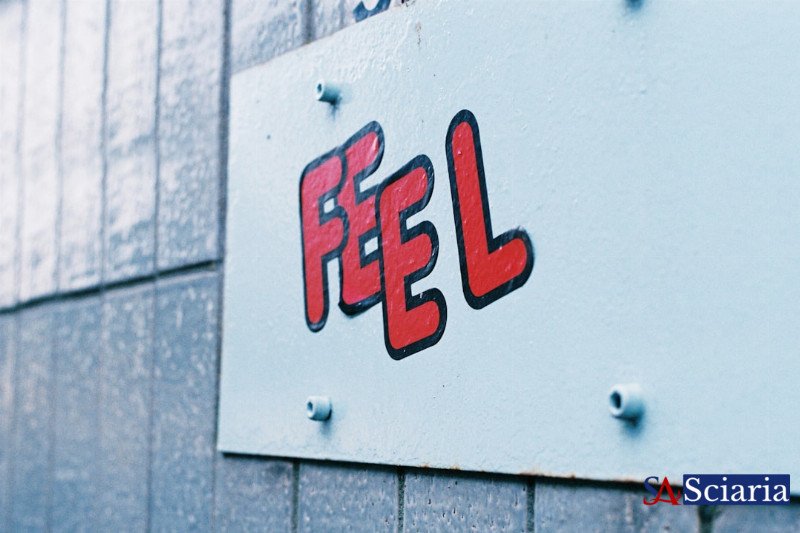
We often trust our 'gut feelings' as purely personal, internal guides. They're quick, intuitive responses that seem to bypass rational thought, signaling danger, comfort, or truth. But what if these deep-seated instincts aren't as individual as they seem? From a sociological perspective, our gut feelings are far more than just biological impulses; they are profoundly shaped by the intricate tapestry of our social world, woven from collective experiences, cultural norms, and shared histories. This exploration delves into how society subtly, yet powerfully, programs our most primal reactions.
Our entire lives are a process of socialization, where we internalize the values, beliefs, and behaviors of our families, communities, and cultures. This lifelong learning isn't just cognitive; it’s deeply embodied. Think of Pierre Bourdieu's concept of 'habitus' – the system of dispositions acquired through experience, which generate our perceptions, thoughts, and actions, often without conscious effort. What feels 'right' or 'wrong' in an instant is often a sophisticated, unconscious readout of countless social interactions, lessons, and cultural cues that have taught us how to navigate the world. Our gut feelings are thus a kind of social intuition, an internal archive of collective wisdom and prejudice.
Beyond individual learning, collective memory and societal norms play a crucial role. A widespread sense of unease about a particular group, or an instinctive trust in a certain type of authority, can often be traced back to shared historical narratives, media representations, or prevailing cultural anxieties. These collective sentiments become internalized, contributing to a 'common sense' that feels inherently true. Whether it's the comfort we feel in familiar social rituals or the instinctive alarm triggered by a breach of unspoken rules, our gut reactions are frequently echoes of the collective consciousness, reflecting societal agreements and anxieties that transcend individual experience.
Furthermore, power dynamics and hegemonic influences can subtly program our gut feelings. Dominant ideologies, propagated through education, media, and political discourse, can shape our emotional responses to social issues, economic policies, or even specific individuals. For instance, an ingrained gut-level suspicion of certain 'outsider' groups might be less about personal experience and more about narratives reinforced by powerful institutions seeking to maintain social order or promote particular agendas. Understanding this allows us to critically examine whose interests our 'gut feelings' might be serving, and how easily our instincts can be manipulated by broader social forces.
So, the next time you feel that powerful surge of intuition, pause to consider its origins. While seemingly personal, your gut feeling is a rich blend of biological predisposition and profound social conditioning. It's a testament to the fact that we are inherently social beings, whose very instincts are co-authored by the societies we inhabit. Recognizing the sociological underpinnings of our intuition empowers us to be more critically aware, allowing us to question, rather than blindly obey, the deep-seated instincts that guide our lives.
Comments (0)
Rate This Blog
Top Blogs by Rating
Rewiring Life: The Optogenetic...
By Sciaria

The Invisible Hand: How Microb...
By Sciaria

Are Algorithms Shrinking Your...
By Sciaria
Favorite Blog

The Bio-Foundry: Forging a Fut...
By Sciaria

The Evolutionary Paradox: Why...
By Sciaria

The Fifth Facade: Designing th...
By Sciaria
Related Research
Pengaruh konsentrasi kitosan terhadap karakteristik fisik dan mekanik bioplastik selulosa batang pisang dengan plasticizer gliserol
Sistem pendukung keputusan pemilihan karyawan tetap pada pt.pn iv tinjowan dengan menggunakan metode topsis berbasis web
Copolymerization of tapioca starch waste through grafting of acrylic acid monomer with cerium(iv) initiator as super absorbent polymer (sap) candidate
Share
Notice Board
- ANALISIS PROFESIONALISME, INDEPENDENSI DAN PENGALAMAN, TERHADAP PENCEGAHAN KECURANGAN PERUSAHAAN
- UTILIZATION OF TELEHEALTH IN IMPROVING THE QUALITY OF HEALTH SERVICES DURING THE PANDEMIC: SYSTEMATIC REVIEW
- PENGARUH KARAKTERISTIK KOMPETENSI TERHADAP KINERJA PEGAWAI KANTOR KOMUNIKASI INFORMASI DAN PERS (KOMINFOPERS) KABUPATEN PASANGKAYU
 Sciaria Research