The Brain's Best Guess: How Predictive Coding Shapes Your Reality
- Sciaria
- Neuroscience
- Jun 01, 2026
- 0 Comments
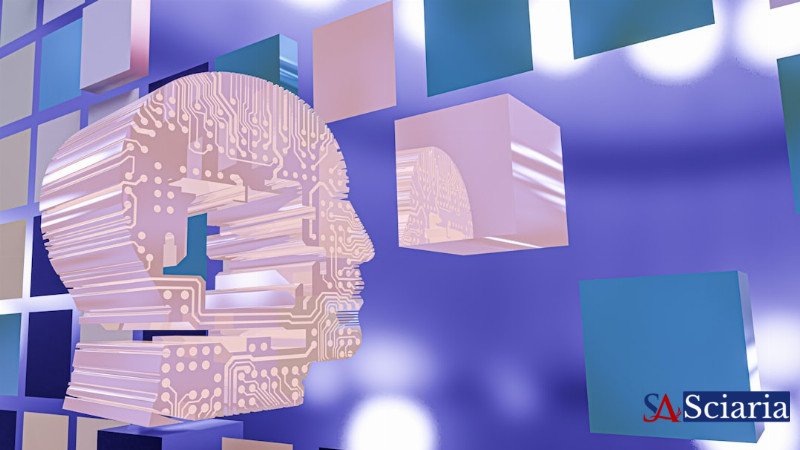
Have you ever considered that the world you perceive isn't just a direct feed from your senses, but an intricate, highly personalized construction by your brain? Far from being a passive receiver of information, your brain is a relentless predictor, constantly making its 'best guess' about what's out there. This fascinating neurological process is known as **predictive coding**, and it fundamentally shapes every aspect of your reality, from what you see to what you feel.
At its core, predictive coding posits that the brain doesn't just wait for sensory input to arrive. Instead, it's constantly generating hypotheses or predictions about the causes of incoming sensory data. When actual sensory information arrives, it's compared against these internal predictions. If there's a mismatch, this discrepancy is called a 'prediction error.' Rather than just discarding the prediction, the brain uses this error to update its internal models, making its future predictions more accurate. It's a continuous, dynamic loop: predict, compare, error-correct, and update. This sophisticated mechanism allows us to efficiently navigate a complex world, filling in gaps, anticipating events, and even ignoring redundant information.
The implications of predictive coding are profound. It explains why we can 'see' things that aren't truly there, such as in optical illusions where our brain's strong prior beliefs override conflicting sensory evidence. It clarifies how our expectations can dramatically alter our experiences – think of the placebo effect, where the belief in a treatment can alleviate symptoms, or how prior knowledge can make a confusing image suddenly snap into focus. Our brain is effectively trying to minimize surprise, making sense of the world by aligning its internal models with external reality, or sometimes, by making external reality fit its models.
Understanding predictive coding offers a powerful lens through which to view not just perception, but also learning, memory, and even mental health. Conditions like anxiety or depression, for instance, can sometimes be understood as states where the brain's predictive models become rigid or generate excessive prediction errors, leading to skewed perceptions and difficulty adapting. This groundbreaking theory highlights that our experience of reality is less about what's 'out there' and more about the elegant, ongoing conversation between our brain's sophisticated internal models and the world around us.
Comments (0)
Rate This Blog
Top Blogs by Rating
The Economic Dividend of Disco...
By Sciaria
Beyond Metal & Gears: Explorin...
By Sciaria

Gender: Unboxing the Self – Fi...
By Sciaria
Favorite Blog

The Unseen Dialogue: Decoding...
By Sciaria

The Algorithmic Whisper: How C...
By Sciaria

The Unseen Architect: How Stat...
By Sciaria
Related Research
Seeking for berkah: the celebration of kiai slamet
Tracing the footsteps of religious extremism: understanding social impact and alternative solutions
Pengembangan e-modul pendidikan anti korupsi berbasis kearifan lokal
Share
Notice Board
- UNJUK KERJA KOMPRESOR RECIPROCATING PADA FUEL OIL COMPLEX – 1 KILANG PERTAMINA
- PENGEMBANGAN MEDIA PEMBELAJARAN PUZZLE MATEMATIKA “PUMA” UNTUK MENINGKATKAN HASIL BELAJAR SISWA DI SEKOLAH DASAR
- PENGARUH BERBAGAI JENIS HIDROKOLOID TERHADAP KARAKTERISTIK TEKSTUR LEMBARAN BUAH DITINJAU SECARA FISIK DAN SENSORI
 Sciaria Research