The Art of Unlearning: Education's New Superpower
- Sciaria
- Education
- Nov 04, 2025
- 0 Comments
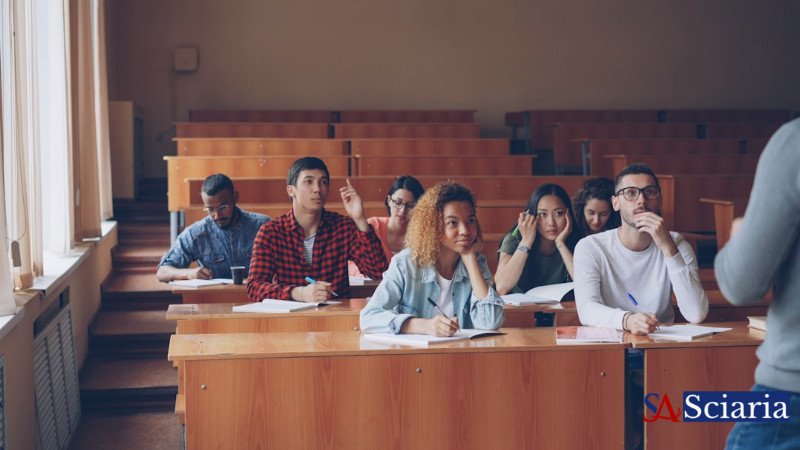
In a world defined by relentless change, the traditional mantra of "learn, learn, learn" might feel incomplete. We've always been taught that knowledge is power, and indeed it is. But what happens when the knowledge we hold becomes obsolete, or even detrimental, to progress? What if the true superpower in education isn't just about accumulating more information, but about strategically shedding outdated frameworks to embrace the new?
Enter the art of unlearning. This isn't about forgetting everything you've ever learned, nor is it about dismissing foundational principles. Instead, unlearning is the conscious process of letting go of existing mental models, assumptions, and practices that no longer serve us, making room for more relevant, effective, and innovative ways of thinking and doing. It's about critically evaluating our established truths and being brave enough to rebuild our understanding when necessary. Think of it as decluttering your cognitive closet – creating space for fresh ideas and agile approaches.
In an era of artificial intelligence, rapid technological shifts, and unprecedented global challenges, the ability to unlearn is no longer a niche skill; it's an educational imperative and a professional differentiator. For students, it fosters a mindset of continuous improvement and resilience. For professionals, it ensures career longevity and innovation. Businesses thrive when their teams can pivot from entrenched methods to embrace novel solutions. Unlearning cultivates adaptability, nurtures critical thinking, and ignites creativity, transforming static knowledge into dynamic wisdom that can navigate uncertainty with confidence. It empowers individuals and institutions to stay relevant, innovative, and competitive.
So, how do we cultivate this vital superpower? It begins with curiosity and humility. Educators can champion inquiry-based learning that encourages students to question assumptions and explore multiple perspectives. For individuals, practicing mindfulness can help identify ingrained biases. Embracing a growth mindset, viewing mistakes not as failures but as data points for recalibration, is crucial. Regularly seeking out diverse viewpoints, challenging the status quo, and deliberately stepping outside comfort zones are all exercises in cognitive flexibility that strengthen our unlearning muscles. It's about being open to the possibility that what worked yesterday might not work today, and being willing to adjust our internal maps accordingly.
Ultimately, the art of unlearning isn't about discarding knowledge; it's about refining it. It's about understanding that our intellectual toolboxes need regular upgrades, not just additions. As education evolves, equipping learners with the capacity to critically assess, adapt, and reconstruct their understanding will be as vital as the knowledge itself. The ability to unlearn truly is education's new superpower, preparing us all not just for the world as it is, but for the world as it's becoming.
Comments (0)
Rate This Blog
Top Blogs by Rating

The Material Renaissance: How...
By Sciaria

Beyond Instinct and Genes: Unv...
By Sciaria
The Mechanical Heartbeat: Engi...
By Sciaria
Favorite Blog

Beyond the Right Answer: The T...
By Sciaria

Is the Interval Part of the Pl...
By Sciaria

Beyond the Desk: Uncovering Yo...
By Sciaria
Related Research
A bibliometric analysis of undergraduate theses in industrial engineering undergraduate at universitas trisakti: research trends and future directions
Random forest algorithm optimization using k-nearest neighborand smote on diabetes disease
Perbandingan model kooperatif group investigation (gi) dengan model two stay two stray (tsts) terhadap hasil belajar siswa kelas x
Share
Notice Board
- KEEPERS OF MEMORIES. PRE-COLUMBIAN PERUVIAN WORKBASKETS IN THE ANTHROPOLOGY AND ETHNOLOGY MUSEUM OF FLORENCE
- PERFORMANCE AND INSTITUTIONAL ADAPTATION OF ACCOUNTING FIRMS IN FOZ DO IGUAçU, BRAZIL, AMID THE COVID-19 PANDEMIC: A MULTI-CASE STUDY
- DIMMI CHE ISCRIZIONI HAI E TI DIRò CHI SEI. LA MEMORIA DEL CASELLARIO GIUDIZIALE E LE SUE RICADUTE GIURIDICO-SOCIALI. UN INVITO ALLO STUDIO
 Sciaria Research