Beyond the Noise: Uncovering Politics' Hidden Common Ground
- Sciaria
- Politics
- Feb 22, 2026
- 0 Comments
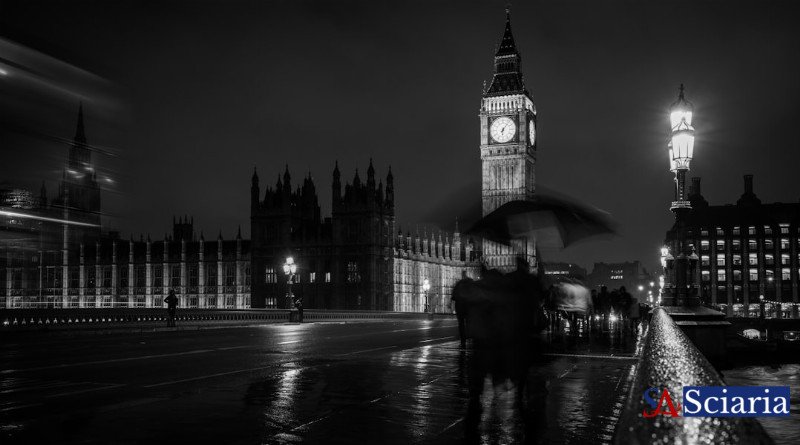
In an age dominated by 24/7 news cycles and social media debates, politics often feels like a relentless battleground of conflicting ideologies. We are constantly exposed to what divides us, with partisan clashes and ideological stalemates dominating headlines. But what if, beneath this cacophony of disagreement, there lies a vast, untapped reservoir of common ground – an "invisible consensus" that goes largely unacknowledged and unutilized?
Modern political discourse, amplified by digital platforms, thrives on conflict. Parties and media alike often find it easier, and arguably more engaging, to highlight differences and exploit wedge issues. This creates an echo chamber of division, where the nuances of policy and the complexities of public opinion are flattened into stark, opposing viewpoints. We see endless debates on healthcare, climate change, economic policy, and social issues, presented as zero-sum games where one side must triumph over the other. This constant focus on divergence overshadows any potential for unity, leading to increased cynicism and political paralysis.
Yet, when we strip away the partisan rhetoric and delve into the fundamental aspirations of most citizens, a remarkable pattern emerges. Across the political spectrum, people generally desire safe communities, quality education for their children, accessible healthcare, economic opportunity, a healthy environment, and a government that functions fairly and effectively. These are not inherently partisan desires; they are fundamental human aspirations. The real disagreement often lies not in *whether* these goals should be pursued, but in *how* to achieve them. For instance, both liberals and conservatives want economic prosperity, but they propose different pathways to get there.
This "invisible consensus" remains elusive for several reasons. Political strategies often benefit from emphasizing differences to energize party bases and motivate voters. Media narratives frequently prioritize sensational conflict over nuanced agreement, as conflict tends to generate more engagement. Furthermore, our political systems and institutions are often designed to facilitate adversarial debate rather than collaborative problem-solving, making it difficult to bridge divides even when shared goals exist. By constantly focusing on what separates us, we inadvertently foster a culture of gridlock and mutual distrust, making meaningful policy solutions seem impossible.
Recognizing and intentionally seeking out this invisible consensus is not about erasing ideological differences or pretending that substantial disagreements don't exist. Instead, it's about shifting our focus from the battleground of *how* we disagree to the foundational understanding of *what* we largely agree on. By identifying these shared values and common aspirations, we can begin to frame political discussions in a more constructive light, fostering dialogue that seeks effective solutions rather than simply scoring political points. Embracing this hidden common ground could pave the way for more effective governance, revitalize public trust, and ultimately build a less polarized and more productive society.
Comments (0)
Rate This Blog
Top Blogs by Rating

Beyond Biology: Unpacking Why...
By Sciaria

Beyond 'Free': Unmasking the H...
By Sciaria

When Operations Become Your In...
By Sciaria
Favorite Blog

The Silent Language of Food: W...
By Sciaria

Invisible Lines: How Non-Physi...
By Sciaria
The Brain's Inner Curator: The...
By Sciaria
 Sciaria Research