Beyond Biology: Unpacking Why We Assign Gender to Objects
- Sciaria
- Gender
- Feb 20, 2026
- 0 Comments
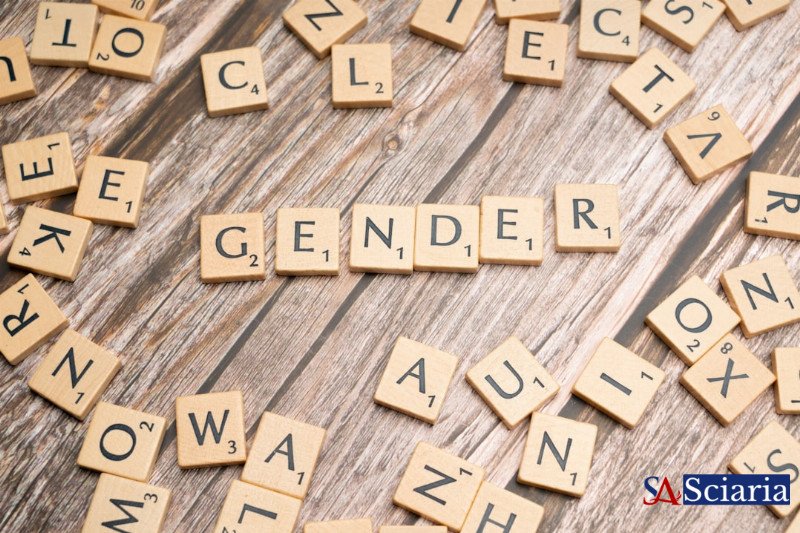
Have you ever stopped to consider why a table might be 'feminine' in Spanish (la mesa) but 'masculine' in German (der Tisch)? Or why a ship is almost always referred to as 'she,' even by English speakers whose language largely lacks grammatical gender? The intriguing phenomenon of assigning gender to inanimate objects is a deep dive into linguistics, culture, and human cognition, revealing more about our minds than the objects themselves.
For speakers of languages like Spanish, French, German, or Arabic, grammatical gender is a daily reality. Nouns are categorized as masculine, feminine, or sometimes neuter, dictating the articles, adjectives, and pronouns that accompany them. Crucially, this assignment often bears no relation to biological sex. A 'book' (le livre) is masculine in French, while a 'door' (la porte) is feminine. These classifications are arbitrary rules established through historical linguistic evolution, serving primarily as a grammatical system for agreement within sentences. They help structure language, providing coherence rather than reflecting inherent qualities of the object itself. Learning these distinctions is a fundamental part of mastering such languages, even if the 'why' remains elusive to native speakers.
Beyond rigid grammatical systems, even languages without formal gender assignments, like English, often see objects imbued with gender through personification. Think of cars affectionately called 'she,' or a trusty hammer referred to as 'he.' This tendency stems from our innate human desire to connect, understand, and even control our environment by projecting human traits onto inanimate things. A ship, often a solitary vessel carrying lives, becomes a 'she' – perhaps evoking protection, nurturing, or even the unpredictable nature of the sea. Tools, machines, or even abstract concepts are assigned gender not for linguistic agreement, but for emotional resonance, a sense of familiarity, or to make them easier to relate to and discuss.
So, why do we do it? Linguistically, it's about historical linguistic development and grammatical efficiency. Psychologically and culturally, assigning gender allows for deeper emotional engagement. It helps us categorize the world, fosters a sense of relationship with our surroundings, and often reflects societal values or perceptions associated with masculine and feminine traits. While a table doesn't feel male or female, our language and minds find it useful – sometimes even essential – to frame it that way, blurring the lines between the animate and inanimate, and enriching the tapestry of human expression.
Comments (0)
Rate This Blog
Top Blogs by Rating

The Material Renaissance: How...
By Sciaria

Are Algorithms Shrinking Your...
By Sciaria
The Mood Menu: Nourishing Your...
By Sciaria
Favorite Blog

Unleash Your Inner Recess: The...
By Sciaria

Unlock Your Inner Healer: The...
By Sciaria

CRISPR Beyond Genes: Programmi...
By Sciaria
 Sciaria Research