The Quantum Compass: How Bird Brains Master Magnetic Navigation
- Sciaria
- Biology
- Mar 04, 2026
- 0 Comments
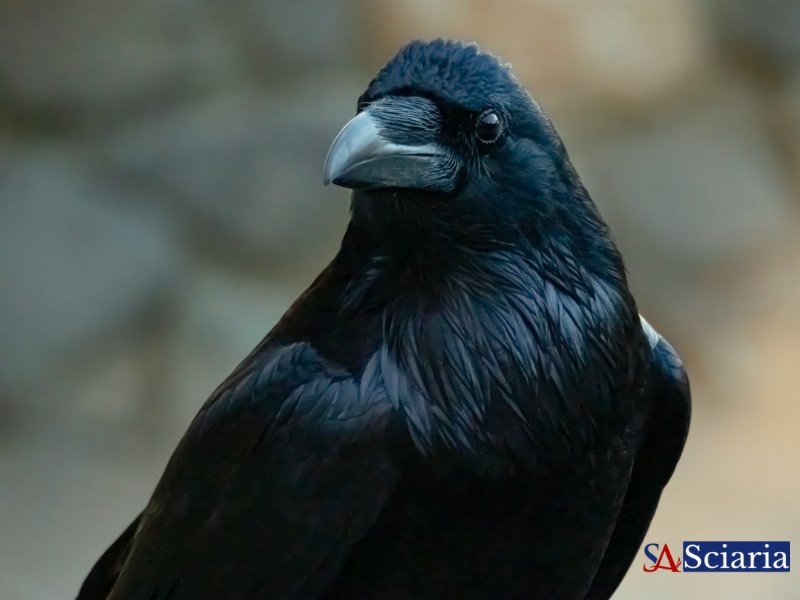
For millennia, the astonishing feats of avian migration have captivated humanity. Birds traverse continents, crossing vast oceans and deserts, unerringly returning to their breeding and wintering grounds. While we’ve long known that these feathered navigators possess an innate ability to sense the Earth’s magnetic field, the precise mechanism remained shrouded in mystery. Recent breakthroughs in biology and quantum physics are now peeling back the layers, revealing a truly mind-boggling secret: birds don't just use a simple magnetic compass; they employ a sophisticated, quantum-mechanical sensor embedded in their very brains (or more accurately, their eyes).
This 'quantum compass' relies on a class of proteins called cryptochromes, found in the retinas of birds. When blue light enters a bird's eye, it triggers a chemical reaction within these cryptochromes, creating what scientists call 'radical pairs.' These are pairs of molecules, each with an unpaired electron, whose spin states are intricately linked. Crucially, the Earth's magnetic field can subtly influence the entangled spin states of these radical pairs. Depending on the orientation of the bird's head relative to the magnetic field lines, the spin states change, which in turn alters the rate and products of the chemical reactions.
The beauty of this quantum mechanism is that it doesn't sense the strength of the magnetic field, but rather its *orientation*. Imagine a tiny, biological sensor that can literally 'see' the angle of magnetic field lines. This provides birds with invaluable directional information, allowing them to perceive global north and south, and thus establish a bearing for their epic journeys. Unlike a physical compass needle, which aligns itself directly, the quantum compass provides a 'visual' map, integrating this magnetic data with other cues like the sun's position and polarized light.
The discovery of this quantum phenomenon in a warm, wet biological system is nothing short of revolutionary. It challenges our traditional understanding of where quantum mechanics applies, extending its reach beyond laboratories and into the fundamental processes of life itself. 'Quantum biology' is a rapidly emerging field, suggesting that sophisticated quantum effects might play roles in photosynthesis, enzyme catalysis, and even our own sense of smell. The avian compass serves as a compelling, real-world example of how evolution has harnessed the bizarre rules of quantum physics for survival.
So, the next time you witness a flock of birds migrating overhead, take a moment to appreciate the invisible, quantum ballet unfolding within their tiny heads. Their incredible journeys are not just a testament to instinct and endurance, but to a hidden world where the strange laws of quantum mechanics are exquisitely tuned to guide life across our planet. The quantum compass isn't just a fascinating biological fact; it's a window into the profound interconnectedness of physics and life.
Comments (0)
Rate This Blog
Top Blogs by Rating

Urban Rewilding: How Greening...
By Sciaria
Beyond Metal & Gears: Explorin...
By Sciaria

Beyond the Ballot: How Everyda...
By Sciaria
Favorite Blog

Beyond the Read Receipt: Decod...
By Sciaria

Beyond the Chart: The Indispen...
By Sciaria
The Brain's Ultimate Illusioni...
By Sciaria
 Sciaria Research